
The storyteller
You enjoy characters, books, film or building imaginary worlds. Start by learning how player choices change the way a story is experienced.
THE STUDENT GUIDE
A practical introduction for students, parents and future collaborators. Understand the work behind the finished game, and make an informed decision about your learning journey.
01 / YOUR STARTING POINT
The foundations stage introduces the shared language of games. Your interests can evolve as you make things.
You enjoy characters, books, film or building imaginary worlds. Start by learning how player choices change the way a story is experienced.
You like drawing, photography, animation or 3D art. Learn to make assets that support a playable experience, not only a beautiful image.
You enjoy systems, logic and discovering how things work. Develop programming foundations and learn to translate a design idea into reliable gameplay.
Basic file management, confidence using a keyboard and mouse, willingness to learn unfamiliar software, and the ability to give and receive feedback. Prior coding or 3D experience is not required for the foundations stage. Final age, education and admission requirements will be confirmed for the intake.
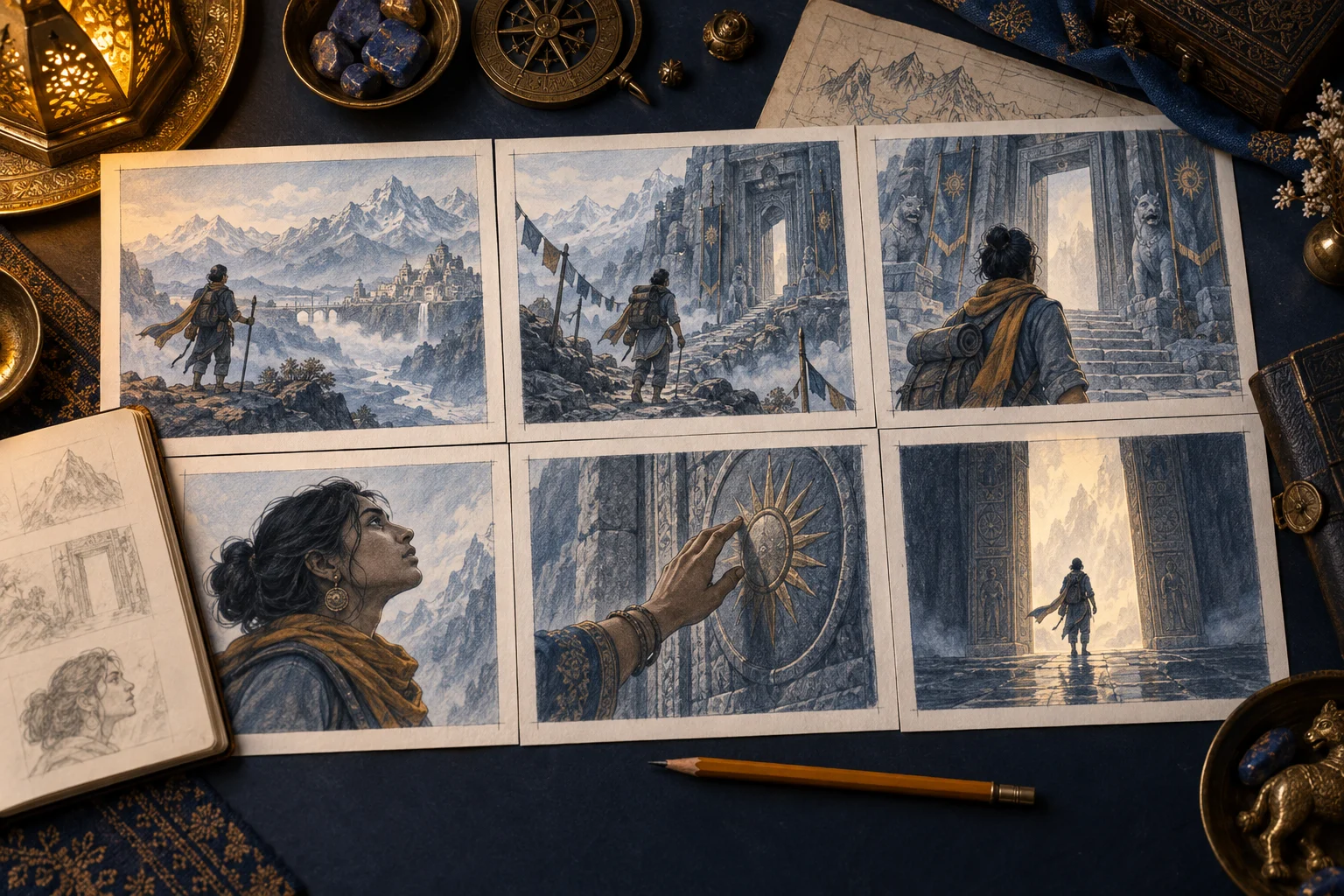
02 / A WEEK IN THE ACADEMY
An illustrative weekly pattern, not a confirmed timetable. Plan for 20 supervised hours and additional independent practice.
| Session | Guided learning | Production time | What moves forward |
|---|---|---|---|
| Day 1 | 2 hours | 3-hour supervised lab | Learn a concept, complete a guided exercise and apply it to your project. |
| Day 2 | 2 hours | 3-hour supervised lab | Build the next component and resolve problems with feedback. |
| Day 3 | 2 hours | 3-hour supervised lab | Review the work, integrate it into the team build and refine it. |
| Production lab | — | 5-hour supervised lab | Playtest, document progress, receive critique and plan the next milestone. |
6 taught hours + 14 supervised lab hours = 20 hours per week. At an illustrative 13 weeks per stage, cumulative totals are 260, 520, 780 and 1,040 hours. Calendar dates and holiday arrangements may change the final schedule.
03 / GET READY TO CREATE
Wait for the academy's confirmed equipment specification and lab-access arrangements. Real-time 3D work depends on the project, graphics hardware, memory and storage. A computer that runs basic lessons may not comfortably handle advanced scenes.
Tell us what you currently have when discussing admission. Do not assume that a phone, tablet or general-purpose laptop will support the full production pathway.
Ask about your existing setupSome tools are free or open-source; others require a subscription, an eligible educational license or paid generation credits. We will confirm required versions, license arrangements and any additional costs before enrollment.
Plan for reliable project backups, headphones, a mouse and enough storage for working files. Internet access is needed for downloads, documentation and online services; final connectivity needs depend on delivery mode.
04 / FIND YOUR ROLE
These are responsibilities, not fixed job titles. Small teams combine roles and students develop more than one skill.
Define the player goal, rules, level flow and story context. Test whether the experience communicates what the team intended.
Build interactions, player feedback and game logic. Debug problems and keep the project playable as features change.
Develop character concepts, prepare models and materials, and connect movement to gameplay needs.
Build spaces, props, lighting and effects. Balance visual direction with performance and technical constraints.
Track tasks, integrate builds, manage credits and sound, document defects and organize playtests.
05 / ASSESSMENT & FEEDBACK
The six-month playable demo is mandatory. Attendance alone does not demonstrate completion. Final assessment weights, submission dates and resubmission opportunities will be published before admission; this guide describes the planned evidence, not an awarding body's approved rubric.
06 / YOUR PORTFOLIO PACKAGE
A packaged Windows demo, installation instructions, controls and known limitations.
A clear recording that shows the actual player experience. Label concept visuals and cinematics separately.
The brief, your role, the constraints, the decisions you made and evidence of improvement.
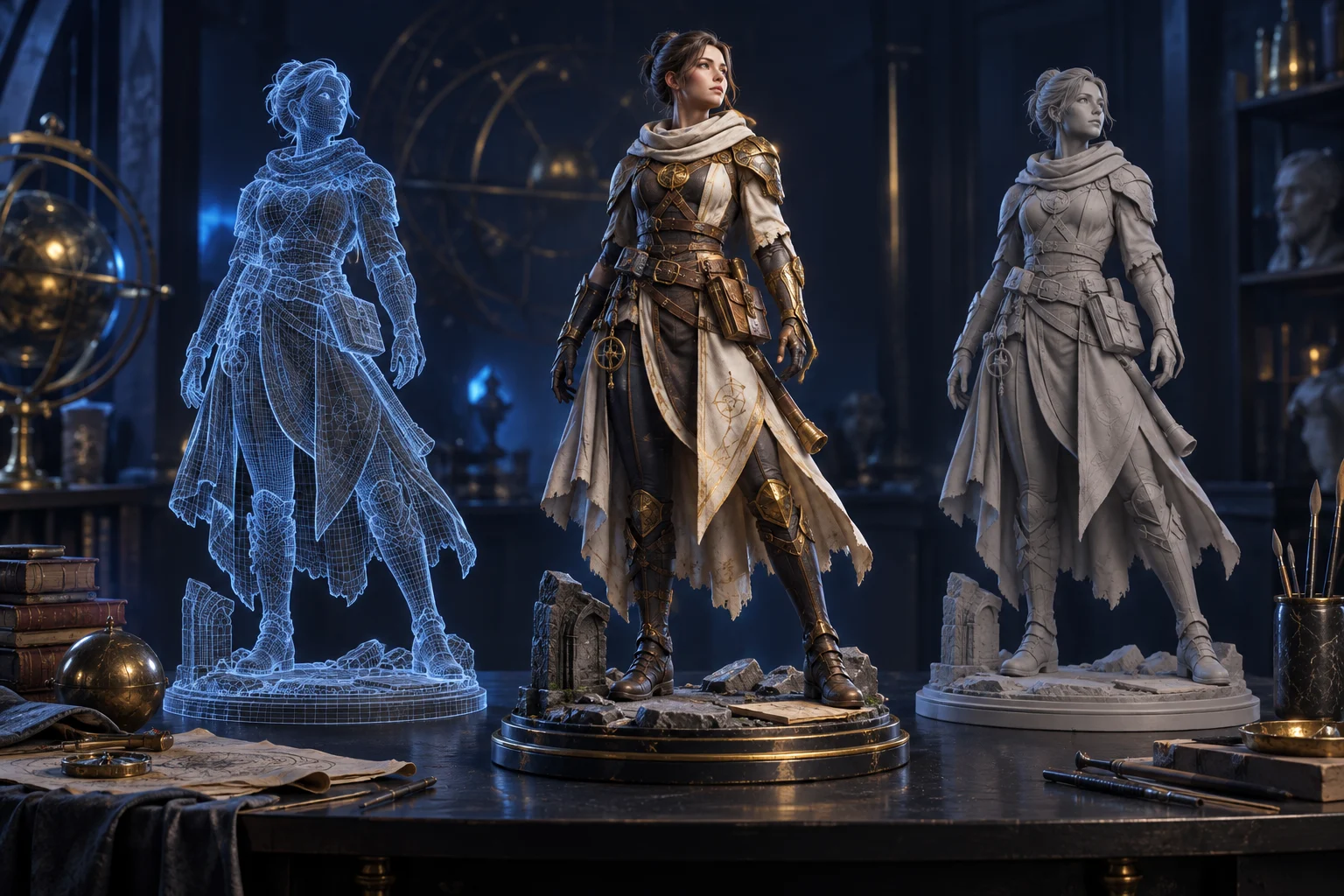
A few strong examples with source-to-result comparisons: sketches, wireframes, materials, code or gameplay logic.
Identify team contributions, third-party assets, licenses and AI-assisted work accurately.
Explain your choices confidently and describe the next steps without overstating the project’s completeness.
AI, ORIGINALITY & RESPONSIBLE PRODUCTION
Check topology, proportions, textures, rigging and performance before integrating generated models. Keep records of the source tool, license and changes you made. Never present another creator's work as your own. The aim is to understand and direct a production process, not to collect tools or rely on a single prompt.
Book publication, store approval and commercial use remain subject to the relevant platform and asset terms. Publishing acceptance is not required to demonstrate the course's learning outcomes.
07 / STUDENT & PARENT QUESTIONS
The pathway is designed with completion milestones at 3, 6, 9 and 12 months. You can express interest in the milestone that fits your plans. Final enrollment and progression options will be confirmed before admission.
The stages build on shared foundations and project work. Any recognition of prior learning or direct-entry assessment would need to be confirmed by the academy; it is not automatic.
You will encounter the foundations of design, visual production and gameplay. As the pathway develops, you can take greater responsibility in a specialization while understanding how the other roles support the game.
The proposed foundations begin with common design and programming concepts. The advanced stage explores Unreal/C++ for RPG-oriented work or Stride/C# for RTS-oriented systems. Changing engines requires a planned technical transition; it does not mean starting a second full game.
The proposed six-month output is a team-written story of about 15,000–20,000 words. Each student documents their contribution. The manuscript supports world-building and is prepared for KDP submission; acceptance is a separate platform decision.
An interest form does not transfer your work. Ownership, team collaboration, use of licensed assets and any showcase permission must be made clear in the enrollment and project agreements. Incubation or publishing would involve separate terms.
No. The course is designed to help you demonstrate skills through completed work. Employment, internships, incubation selection and funding decisions depend on separate organizations, applications and individual circumstances.
Not yet. The interest form collects your city and delivery preference to help plan the launch. Registering a preference is not a promise that a specific mode or location will be offered.
These will be shared before formal enrollment. Pre-enrollment is currently free and does not reserve a seat or create a payment obligation.
Accreditation and awarding arrangements are not yet confirmed. Do not interpret planned contact hours, course titles or software logos as proof of approval. Confirm the final qualification details before paying.
Teaching-language arrangements will be confirmed for the intake. Many software interfaces and reference resources use English terminology, which students will encounter through practical work.
The mandatory deliverable and individual evidence still matter. The academy will communicate its assessment and reassessment process before enrollment. The production approach emphasizes a small scope, frequent builds and early playtesting to reduce this risk.
YOUR NEXT CHAPTER STARTS HERE
Free registration of interest. No commitment.